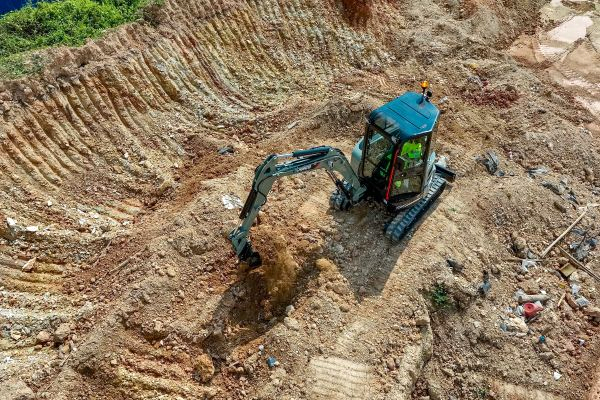
Mini excavators are highly versatile machines for land clearing, especially on residential lots, farms, construction sites, and confined areas. A typical land-clearing process with a mini excavator follows five key stages: selecting the right setup, removing surface vegetation, clearing trees and stumps, grading the ground, and performing final cleanup.
Step 1: Choose the Right Machine and Attachments
The first step is selecting a mini excavator suited to the ground conditions and the size of the material being removed. In many cases, the right attachments determine the overall efficiency of the job.
Common attachments used for land clearing include:
Mini Excavator
Choose a model with strong stability, sufficient hydraulic power, and good attachment compatibility to handle demanding tasks efficiently.
Forestry Mulcher
Ideal for clearing brush, saplings, and dense surface vegetation before excavation begins.
Hydraulic Thumb
Useful for gripping and moving roots, logs, stumps, and debris during removal and cleanup operations.
Bucket
Used for digging, scraping, grading, and moving loose soil or debris.
Rake or Grapple
Helps separate roots, branches, rocks, and loose materials during final cleanup.
A simple rule applies: select the attachment best suited for the most time-consuming material on site. For brush-heavy terrain, start with a mulcher. For root- and stump-heavy areas, a hydraulic thumb is often more effective.
Step 2: Remove Brush and Surface Vegetation
Start by clearing low vegetation to expose the actual site conditions. Grass, weeds, vines, shrubs, and saplings often conceal rocks, roots, broken concrete, and uneven terrain.
Work along a planned path, pushing or scraping vegetation aside and piling loose material in designated areas for later disposal.
This first pass is about more than appearance—it creates working space, reveals hidden obstacles, and makes later grading and stump removal much easier.
Step 3: Remove Trees and Stumps
Once surface vegetation is cleared, heavier materials can be addressed.
Small trees can often be loosened and removed using the hydraulic thumb. Stumps usually require more detailed work:
- Dig around the stump to expose major roots
- Use the bucket to break or separate side roots
- Rock the stump back and forth to loosen it
- Lift only after it moves freely
For larger trees, clear surrounding vegetation first to improve visibility and machine access.
If trees exceed the machine’s safe operating capacity, use proper cutting equipment or hire professional forestry services. Mini excavators are excellent for handling and clearing materials, but they are not a substitute for heavy forestry machinery when dealing with massive trees.
Step 4: Grade the Ground
After vegetation, roots, and stumps are removed, grade the site to create a cleaner and more stable surface.
Use the bucket to:
- Cut down high spots
- Fill low areas
- Remove remaining rocks, roots, and buried debris
In many cases, the goal is not a perfectly finished grade, but a stable, well-drained surface suitable for the next phase of work.
For construction preparation, follow specified elevation and slope requirements. For general land use, focus on smooth access routes and proper water runoff.
Step 5: Final Cleanup and Debris Removal
The final step is sorting and removing cleared material.
Separate:
- Logs and roots
- Wood chips and brush
- Rocks and excess soil
- Reusable or recyclable materials
Typical cleanup tasks include hauling debris away, stacking organic waste, spreading reusable fill material, and making a final inspection pass.
Do not rush the final stage. Even if the site appears finished, loose roots, stump fragments, or rock piles can still create problems during the next stage of work.
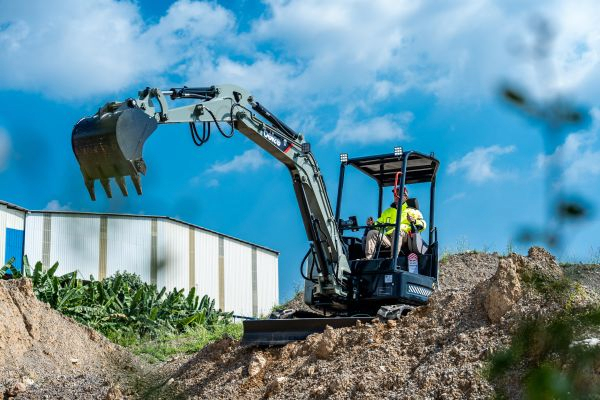
What Can a Mini Excavator Clear?
Mini excavators are highly effective for clearing:
- Brush and weeds
- Small trees and roots
- Loose rocks and fallen branches
- Medium-sized stumps
- Uneven terrain and debris piles
They are particularly useful on medium-sized sites requiring excavation capability in confined areas such as around fences, buildings, driveways, and narrow access routes.
Typical applications include:
- Overgrown lot clearing
- Residential site preparation
- Farm and rural maintenance
- Property boundary cleanup
- Storm damage removal
With the right attachments, a mini excavator can dig, grab, lift, scrape, loosen, and stack materials without requiring multiple machines—saving both time and labor on compact job sites.
However, extremely large stumps, dense mature forests, heavily buried rock, or major land reshaping projects may require larger excavators, bulldozers, or specialized forestry equipment.
In short, mini excavators perform best on mixed-terrain clearing jobs where brush, roots, uneven ground, and scattered debris all need to be managed efficiently.